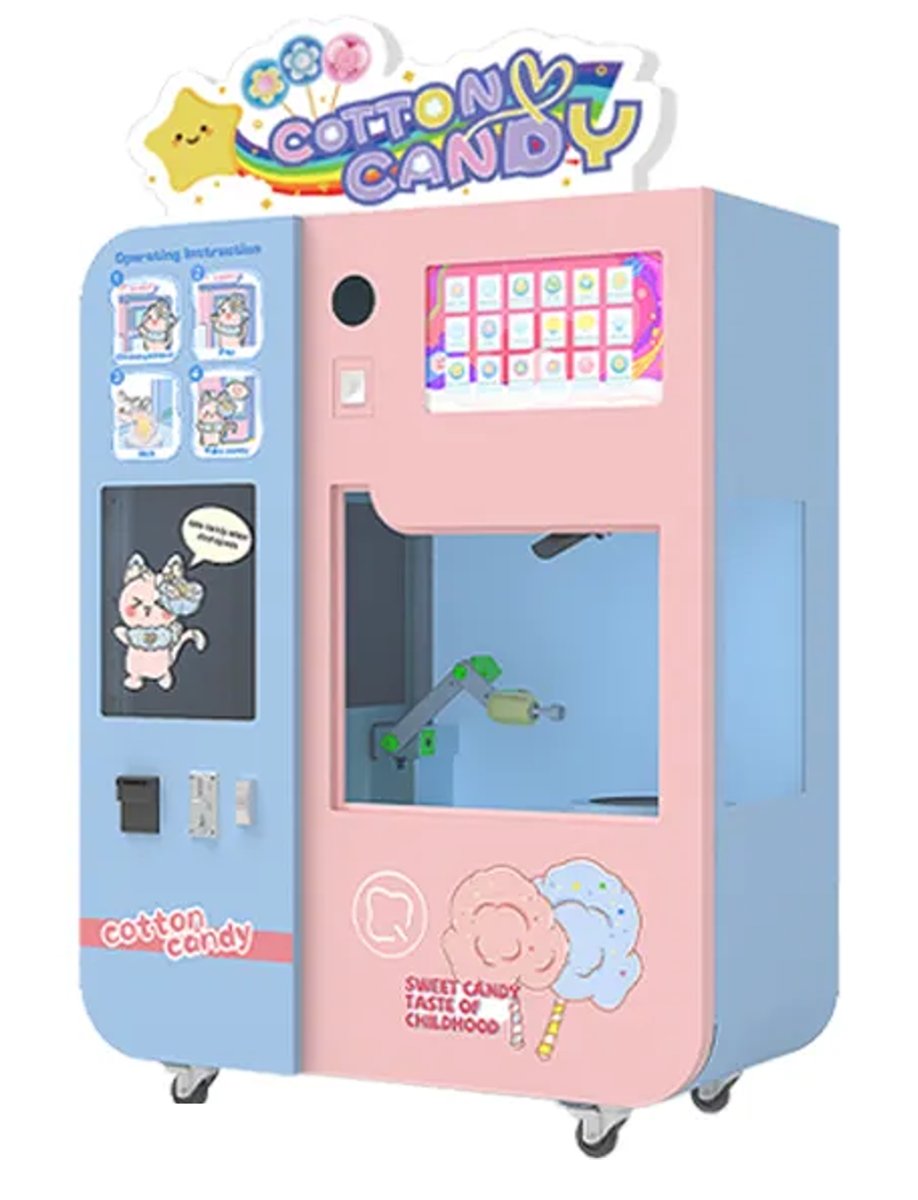
What you will take away
- Do not start with a promised monthly number. Start with the assumptions that drive payback.
- Commercial placements depend on family traffic, visibility, uptime, venue terms, and service access.
- Mini and Micro event math depends on bookings, event size, service window, staffing, and competing sweet treats.
Ready for machine fit help?
Use what you learned here, then bring your venue, budget, and timeline into the purchase-path conversation.
Start with pressure-testing, not a promised number
When someone asks, 'What is the ROI?' the honest answer is that we do not give canned monthly-sales numbers or payback dates. Your results will depend on the venue, audience, price, costs, uptime, service rhythm, seasonality, and how well the business is operated.
What we can do is help you pressure-test the assumptions. That is usually more useful anyway. A single optimistic number can make a weak plan look exciting; a good worksheet shows what has to be true before you spend money.
Think of this like a rehearsal. Before a machine arrives or an event is booked, you want to know which assumptions matter most, which ones you can verify now, and which ones need a pilot before you trust them.
The public frame
We will not promise monthly income, but we can help you pressure-test the assumptions that drive payback.
Use landed startup cost, not sticker price
The first number in the model is the amount you are trying to recover. Machine price matters, but it is rarely the whole launch budget.
If a list price does not include import fees, tariffs, shipping, duties, customs brokerage, delivery, setup, payment hardware, accessories, sugar, sticks, local readiness, or a small operating buffer, those belong in the worksheet before you calculate payback.
This is especially important for imported machines or replacement parts. Do not assume the quote and the landed cost are the same thing until shipping, tariff, duty, brokerage, and delivery terms are clear.
Startup-cost rows to confirm before using any payback model.
| Cost row | What to verify | Why it matters |
|---|---|---|
| Machine/list or quote price | Model, configuration, accessories, customer payment setup, wrap or add-ons | This is the base, not always the final landed cost |
| Import, tariffs, duties, brokerage | Who pays each fee, when it is due, and whether it is included | Unexpected landed-cost items can materially change recovery math |
| Shipping, freight, delivery, setup | Origin, destination, liftgate/access needs, final-mile assumptions | A hard-to-access site can add work or cost |
| Accessories and payment hardware | Card reader, mounts, extension cords, bins, signage, event kit | Small items are easy to miss and annoying to buy late |
| Opening supplies | Sugar, sticks, cleaning basics, backup consumables | A machine cannot launch cleanly without inventory |
| Operating buffer | Reserve for early restocks, travel, setup changes, and service needs | A buffer keeps normal surprises from derailing the launch |
Then separate contribution from fixed costs
The simplest useful payback model starts with contribution per serving: planned price per serving minus the costs that rise with each serving. For cotton candy, that can include sugar, sticks, packaging, payment fees, and any venue share tied directly to sales.
Then compare that contribution against monthly fixed costs such as rent, storage, insurance, software, service travel, staffing, outside debt service, or recurring venue obligations. The SBA's break-even formula uses fixed costs divided by price minus variable cost to estimate the unit count needed to break even.
That formula is not a promise. It is a way to see whether your assumptions are even in the neighborhood before you call the plan healthy.
Plain-English planning formulas.
| Planning output | Formula | How to use it |
|---|---|---|
| Contribution per serving | Price per serving - variable cost - payment fee - sale-based venue share | Shows how much each modeled serving contributes before fixed costs |
| Monthly break-even servings | Monthly fixed costs / contribution per serving | Shows the serving count needed before startup recovery begins |
| Monthly recovery amount | Modeled monthly sales dollars - variable costs - fixed costs - venue terms | Shows what is left in the model to recover startup cost |
| Startup recovery period | Startup cost to recover / monthly recovery amount | A scenario output, not a guaranteed payback date |
Commercial placement math starts with family demand
For commercial machines, raw foot traffic is only one ingredient. A busy hallway full of rushing adults may be weaker than a smaller family entertainment lobby where parents are waiting and kids are already in treat mode.
A stronger commercial model looks at daily foot traffic, family or parent presence, visibility, dwell time, impulse capture rate, service hours, practical throughput, uptime, rent, revenue share, and service costs.
This is why site walks matter. Stand where the machine would sit. Watch who pauses. Notice whether parents have time to say yes, whether the machine is visible from a natural waiting point, and whether staff understand the service path.
Commercial assumptions to verify before trusting the model.
| Assumption | Useful question | What can go wrong |
|---|---|---|
| Foot traffic | How many people pass during treat-ready hours? | Big traffic can be misleading if nobody stops |
| Family/parent presence | What share of traffic includes kids, parents, caregivers, or celebration buyers? | A venue can be busy but not cotton-candy friendly |
| Impulse capture | What share of likely buyers would realistically purchase? | Tiny changes here can swing the payback model |
| Capacity and uptime | How many service hours and practical orders per hour are realistic? | The model can overstate volume if it ignores cycle time or restock windows |
| Venue terms | Is the deal rent, revenue share, hybrid, or amenity-based? | A good-looking location can get expensive if terms are unclear |
Mini and Micro event math starts with the booking
For Mini and Micro, the sales question is less about daily foot traffic and more about booked events, event size, serving window, package structure, staffing, travel, and whether other sweet-treat vendors are nearby.
A birthday party with 60 guests and no dessert competition is not the same as a festival with several dessert vendors and a short service window. Both can be useful tests, but they should not use the same assumptions.
Event operators should model slow months too. A worksheet that only works during your busiest season is not a full plan; it is a best-case snapshot.
Event assumptions that change the math.
| Assumption | What to model | Why it matters |
|---|---|---|
| Bookings per month | Confirmed or realistic event count, including seasonality | More events can also mean more travel, setup, and staffing |
| Attendance and buyer fit | Guests who are actually in the mood or age group for cotton candy | A large adult-only event may be less useful than a smaller kid-heavy party |
| Competing sweet treats | Dessert table, ice cream vendor, candy cart, or included treats | Competition can reduce servings even when attendance is strong |
| Service window and throughput | Hours serving, practical orders per hour, line flow, and machine capability | A short window can cap sales even when interest is high |
| Event costs | Travel, staffing, parking, table kit, cleaning, packaging, and admin time | Event revenue can look better than it feels if costs are missing |
Venue terms can change payback as much as demand
Rent and revenue share are not small footnotes. They can change the model as much as price or volume. A high-traffic placement with expensive fixed rent may be riskier than a lower-traffic pilot with terms that let both sides learn.
This is why we recommend modeling terms before negotiating them. Run the same placement as rent, revenue share, and hybrid minimums. Then ask which structure keeps incentives fair and gives the operator enough room to service the machine well.
Avoid treating any percentage or rent amount as 'standard.' Venue economics vary too much by location, audience, staffing expectations, utility access, and whether the machine is positioned as an amenity or a revenue source.
What this means in practice
A better question than 'What should I pay the venue?' is 'What terms let both sides learn from real performance without making the operator absorb all of the risk on day one?'
Build three scenarios before you buy
One scenario is usually just a guess. Three scenarios force you to think. Build a conservative case, a base case, and a stress case before you request final quote details.
The conservative case should feel almost boring: lower demand, real landed costs, real service costs, and venue terms included. If the plan only works when every assumption is friendly, you have learned something important before spending.
After launch, replace assumptions with observed data. The first 30 days are not a verdict; they are a measurement period.
A simple scenario-planning structure.
| Scenario | How to set it | Decision it helps with |
|---|---|---|
| Conservative | Lower demand, higher startup cost, full venue terms, realistic service costs | Can the plan survive ordinary disappointment? |
| Base | Your best current estimate after quote, site walk, and event research | What has to be true for the plan to feel worth testing? |
| Stress | Fewer servings, higher landed cost, slower ramp, or more service time | Which assumption would break the plan first? |
Bring better assumptions into the purchase-path conversation
A purchase-path conversation is much more useful when you bring the shape of your model. You do not need perfect numbers; you need thoughtful assumptions.
Tell Bloomjoy which machine path you are modeling, what costs are still unknown, whether the machine will be placed or staffed at events, and what terms you are trying to negotiate. That helps the conversation stay grounded.
Operator checklist
- Machine path: Commercial placement, Mini events, Micro test, or unsure
- Known startup costs and unknown landed-cost items
- Target venue type or event customer
- Planned price per serving or event package structure
- Rent, revenue share, or venue-term questions
- Opening sugar, sticks, accessories, payment hardware, and setup needs
- First 30-day measurement plan after launch