Mini Machine
$4,000
Expected price. Not yet available to order.
A smaller machine for staffed events and compact venues. Manual stick feeding, 18 patterns, and a 430 × 555 mm footprint. Plan for an 83.9 kg cabinet.
About 90 seconds per candy before stick handling and guest service.
Ordering will open here when Mini launches. A launch date is not yet confirmed.
Compare machines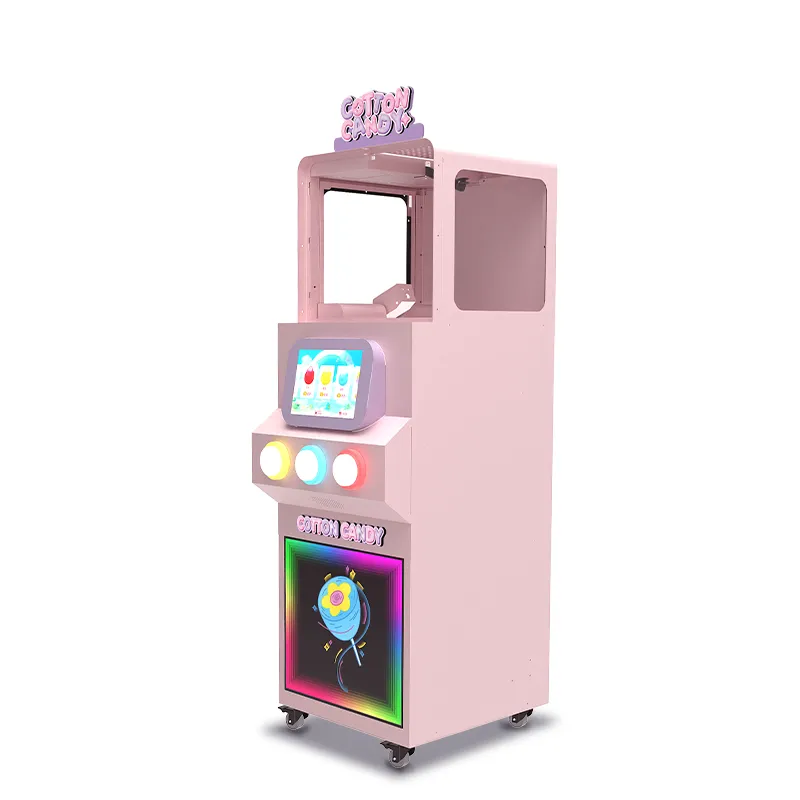
Fit, features, and planning guides
Planning mobile, event, or catering service?
Check Mini fit for a food truck or trailerRead the Mini event business guideFeatures
- Portable design (1/5 size of commercial)
- Most complex pattern capabilities
- Ideal for mobile operators
- Compact footprint for small venues
Limitations
Real-world preview
See Mini in operation
Use these short clips to evaluate service rhythm, manual stick handling, cabinet access, and guest-facing motion before ordering opens.
A public Mini operation clip so buyers can see the machine rhythm, movement, and output style before ordering launches.
More views: stick handling and cabinet access
Close chamber footage showing the manual stick path and finished-serving handoff area inside the Mini cabinet.
A short close-up of Mini running in a compact setup so teams can evaluate cabinet access, motion, and guest-facing feel.
Best Fit
- Portable footprint for operators who do not need the full commercial cabinet.
- Most complex patterns are supported, but stick handling remains manual.
- Best for mobile setups, smaller venues, and buyer trials where space is a constraint.
Purchase Expectations
- Mini is coming soon and is not currently available to order.
- Final pricing and delivery details will be published when ordering opens.
- For a machine available by quote today, compare the Commercial Machine.
Specifications and throughput
Specs and Throughput Planning
Mini planning details in readable form so buyers do not have to rely on image-only sales-sheet specs.
Cycle Guidance
~90s per candy
Planning Capacity
~40/hour
Footprint
430 x 555 mm
Height
1582 mm
Weight
83.9 kg
Power
110V/220V
| Dimensions (W x D x H) | 430 x 555 x 1582 mm |
|---|---|
| Machine Weight | 83.9 kg |
| Rated Voltage | AC 110V/220V |
| Maximum Power | 2400W |
| Standby Power | 100W |
| Pattern / Flavor Support | 18 flower patterns / 4 flavors |
| Owner-Provided Cycle Guidance | ~90 seconds per candy |
| Planning Capacity | ~40 candies/hour machine-cycle capacity before staff and customer-flow effects |
What the 90-second cycle means in practice
- Plan from roughly one candy every 90 seconds, or about 40 candies per hour of machine-cycle capacity.
- Real serving throughput changes with manual stick feeding, guest/payment flow, pattern choice, staffing, setup, and how much conversation is part of the experience.
- For compact or lower-volume environments, launch planning should confirm whether the service model is a staffed amenity, scheduled pop-up, or occasional guest surprise.
Operating assumptions for launch planning
Use these inputs to size staffing, cleaning, service flow, and placement. They are planning assumptions, not guaranteed performance claims.
Planning estimate below the ~40/hour machine-cycle ceiling after manual stick feeding, guest/payment flow, pattern choice, and resets.
Use the 90-second machine cycle as the ceiling, then discount for manual stick handling, guest interaction, payment flow, pattern choice, and resets. Confirm the target service window during launch planning.
Staff should practice setup, stick handling, guest handoff, reset, and close-down with onboarding materials before serving guests.
Planning estimate for wipe-down and debris checks around the burner, bowl, output path, and stick-handling surfaces.
Manufacturer-platform maintenance rhythm used for Sunze cotton candy machines; confirm Mini-specific steps during onboarding.
Mini has fan, motor, spinner motion, and cotton-candy aroma. Quiet venues should review clips and test placement before purchase.
| Staffed service pace | 25-35 servings/hour staffed | Planning estimate below the ~40/hour machine-cycle ceiling after manual stick feeding, guest/payment flow, pattern choice, and resets. |
|---|---|---|
| Curated service planning | Below staffed event pace | Use the 90-second machine cycle as the ceiling, then discount for manual stick handling, guest interaction, payment flow, pattern choice, and resets. Confirm the target service window during launch planning. |
| Initial staff ramp | Plan a practice block | Staff should practice setup, stick handling, guest handoff, reset, and close-down with onboarding materials before serving guests. |
| Daily cleaning/reset | 5-10 minutes | Planning estimate for wipe-down and debris checks around the burner, bowl, output path, and stick-handling surfaces. |
| Routine maintenance | ~15 days; 20-30 minutes | Manufacturer-platform maintenance rhythm used for Sunze cotton candy machines; confirm Mini-specific steps during onboarding. |
| Sound and aroma check | Confirm in room | Mini has fan, motor, spinner motion, and cotton-candy aroma. Quiet venues should review clips and test placement before purchase. |
Venue fit and operating costs
Compact Venue and Hospitality Fit
Mini can be evaluated for staffed, compact guest-experience settings where footprint, service rhythm, and the operating environment matter as much as raw throughput.
- Compact cabinet footprint works better for tighter front-of-house or hospitality spaces than the full commercial cabinet.
- Mini still needs a real power plan, a stable placement, service access, and a cleaning path that fits the environment.
- Because cotton candy creates motion, aroma, and some operating sound, quiet or appointment-based venues should review the clips and confirm guest-experience fit before purchase.
- Manual stick feeding means a staff member owns each serving; Mini is not a passive vending placement.
Unit-Economics Inputs
Bloomjoy does not promise ROI, sales volume, or payback dates. Use the public planner to pressure-test the assumptions that would need to be true for your setting.
- Planned selling price per serving or package
- Sugar, paper sticks, packaging, and payment fees
- Staffing, setup, cleanup, travel, or site-service time
- Opening supplies, accessories, delivery, and operating buffer
- Payment hardware such as Square if charging on site; Mini does not include a card reader
- Any rent, event fee, venue share, or hospitality program cost
Cost and price assumptions to model
These are scenario inputs for a worksheet, not market advice or a promise of sales volume, ROI, or payback period.
Planning range from Bloomjoy sugar pricing and typical small-serving sugar portions.
Bloomjoy branded sticks are currently priced by the box at 2,000 pieces.
Sugar, stick, and a small buffer for waste or light packaging; excludes labor, venue cost, payment fees, and machine cost.
Depends on the operator payment processor and hardware; Mini does not include a card reader.
Use as a scenario range, not market advice; the public planner also includes an $8 example input.
| Sugar | ~$0.15-$0.30 / serving | Planning range from Bloomjoy sugar pricing and typical small-serving sugar portions. |
|---|---|---|
| Paper stick | ~$0.07 / serving | Bloomjoy branded sticks are currently priced by the box at 2,000 pieces. |
| Consumables subtotal | ~$0.35-$0.50 / serving | Sugar, stick, and a small buffer for waste or light packaging; excludes labor, venue cost, payment fees, and machine cost. |
| Payment fees | Often ~3% + fixed fee | Depends on the operator payment processor and hardware; Mini does not include a card reader. |
| Price input to model | ~$7-$10 / serving | Use as a scenario range, not market advice; the public planner also includes an $8 example input. |
Daily operation and support
Operational Fit
Mini is a smaller, staffed operating model. The day-to-day rhythm should be planned before delivery so the machine fits the customer experience and the team operating it.
Staff Training
Plan a practice block before serving guests. Bloomjoy Plus adds task-based training, setup guides, maintenance checklists, and the Operator Essentials certificate path.
Manual Serving Model
Mini does not include automatic stick dispensing. Staff manually feed each stick and should own line flow, guest handoff, and reset between servings.
Cleaning Rhythm
Plan a 5-10 minute daily close/reset estimate for wipe-down and debris checks around the burner, bowl, output path, sugar areas, and stick-handling surfaces before the machine is closed or moved.
Routine Maintenance
Use the same planning rhythm as the Commercial Machine for routine maintenance: about every 15 days, usually 20-30 minutes, then confirm Mini-specific details during onboarding.
Reliability and Support
Component, warranty, and support details will be confirmed when online ordering launches, but the public support posture is aligned with the Commercial Machine.
- Mini sits in the same core operating and support family as the Commercial Machine, packaged into a smaller cabinet and manual-stick service model.
- Machine warranty coverage follows the same public posture as Commercial: up to 1.5 years, with final terms confirmed when online ordering launches and during handoff.
- Manufacturer support provides 24/7 first-line remote technical support via WeChat for diagnostics, troubleshooting, warranty service, and replacement-part workflow.
- Manufacturer remote response timing depends on channel availability, time zone, and issue context; Bloomjoy concierge support helps triage, translate, escalate, and coordinate parts during US business hours.
- Common operator checks include dry sugar feed, sugar fill level and cap seal, paper-stick position, output path debris, sugar pickup or sensor areas, and burner/spinner residue.
- Replacement-part availability and cost are confirmed case by case after remote diagnosis; Bloomjoy helps keep parts requests tied to the support workflow.
Source and estimate basis
- Exact dimensions, weight, power, pattern count, and 90-second cycle guidance come from Bloomjoy Mini materials and owner-provided operating guidance.
- Maintenance and support planning uses Sunze public cotton candy machine guidance where it applies to the shared operating family.
- Throughput, sound, training, cleaning, and serving-cost assumptions are planning inputs until Bloomjoy has measured Mini field data for a specific setting.