What you will take away
- The best location is not just busy. It is busy with the right people in the right mood.
- Family dwell time, power access, operator access, and venue enthusiasm matter more than raw foot traffic.
- A simple scoring rubric helps you compare locations without falling in love with the first yes.
Ready for machine fit help?
Use what you learned here, then bring your venue, budget, and timeline into the purchase-path conversation.
Look for attention, not just traffic
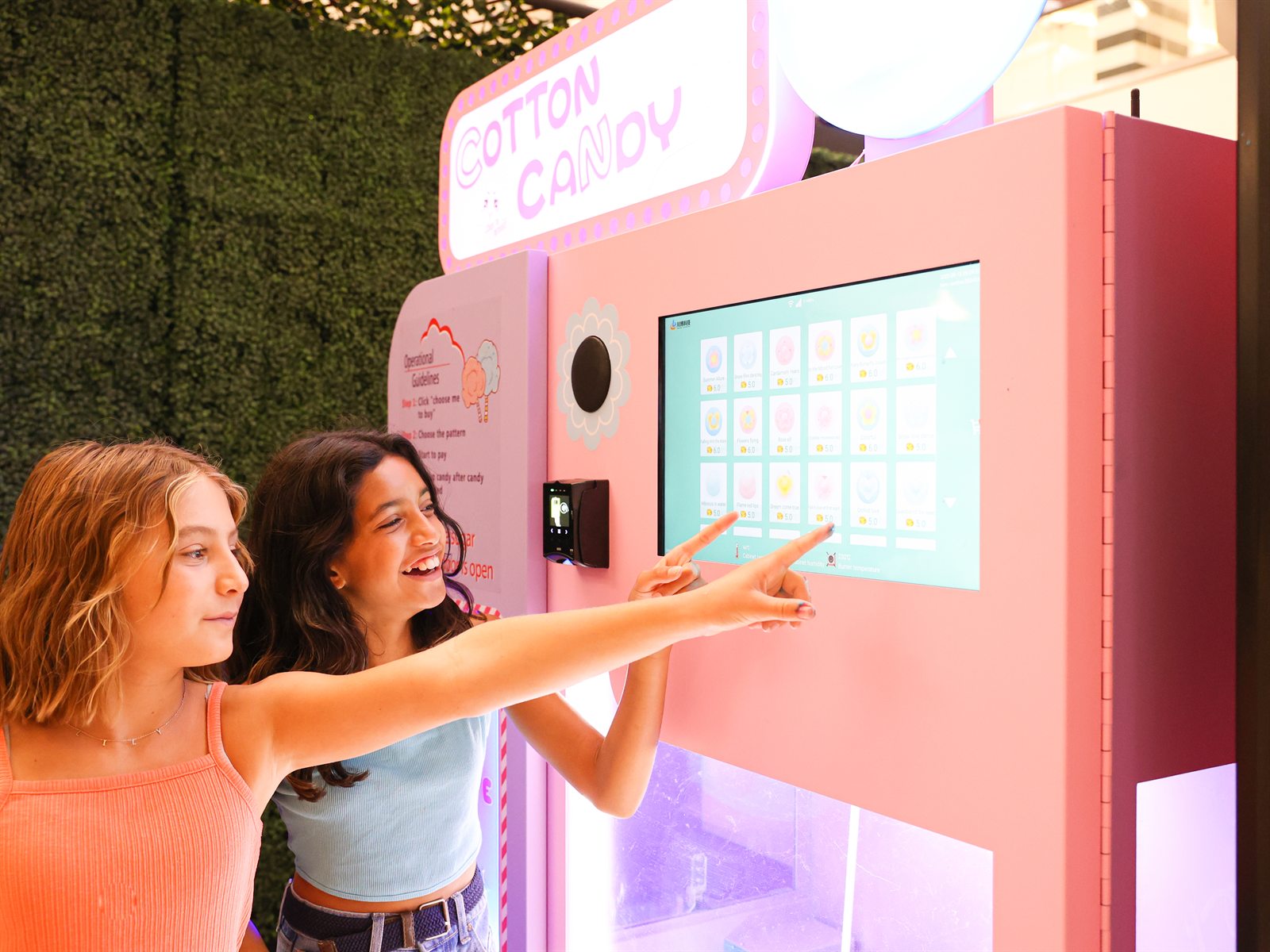
A cotton candy machine is a small show. It works best where people already have permission to be delighted: family entertainment centers, arcades, skating rinks, tourist retail, malls, resorts, cinemas, birthday-party venues, and seasonal attractions.
Raw foot traffic can fool you. A commuter hallway may be packed, but nobody wants to stop. A family entertainment lobby with fewer people can be better because parents are waiting, kids are watching, and the venue already sells fun.
When we think about locations, we look for the pause. Where do families slow down? Where does a kid have time to point? Where is a parent already in treat mode? The best spot is often not the entrance. It might be near party check-in, an arcade prize counter, a concession line, or a lobby where families wait between activities.
Quick location scorecard
Audience fit
1-5
Families, kids, tourists, or celebration buyers are already present.
Dwell time
1-5
People wait, browse, or gather long enough to notice the machine.
Visibility
1-5
The machine can face traffic without being tucked behind a corner.
Operations
1-5
Power, refill access, cleaning access, and service visits are practical.
Venue motivation
1-5
The owner wants a guest experience upgrade, not only a rent check.
Prioritize these venue types first
Start where the product already makes emotional sense. Cotton candy is visual, nostalgic, and kid-friendly. The best placements turn that into a small moment of theater.
If you are new, build a short list by category instead of contacting every business in town.
| Venue type | Why it can work | Question to ask |
|---|---|---|
| Family entertainment center | Kids, birthdays, wait time, arcade energy | Where do families wait before or after activities? |
| Mall or tourist retail | Foot traffic plus impulse purchases | Can the machine be visible without blocking flow? |
| Skating rink or trampoline park | Repeat family visits and party traffic | Who manages party packages and lobby concessions? |
| Cinema or attraction lobby | Pre-show waiting and treat mindset | Can the machine operate near existing concessions? |
Turn the scorecard into a decision
A scorecard only helps if you decide what the score means before you fall in love with a location. Use the total to decide the next move, not to create a false sense of certainty.
If a location scores high but has one serious operational problem, treat it as a maybe until that problem is solved. A beautiful spot with bad access, unsafe power, or unclear ownership can become expensive quickly.
A simple way to interpret a 25-point location score.
| Score | Read | Next move |
|---|---|---|
| 21-25 | Strong candidate | Request a site walk, confirm power/access, and discuss pilot or terms |
| 16-20 | Promising but needs proof | Identify the weak score and ask targeted questions before pitching hard |
| 11-15 | Probably not first | Keep in the pipeline only if one fix would materially improve the site |
| 10 or below | Pass for now | Do not spend early launch energy trying to rescue the wrong location |
Compare real-feeling venue scenarios
The point is not to find a perfect venue. The point is to understand why one venue deserves your attention before another.
Here is how we would think about a few common situations before spending time on a pitch.
| Scenario | What looks good | What to verify before yes |
|---|---|---|
| Family entertainment center lobby | Birthday traffic, parents waiting, kids already asking for treats | Party schedule, staff contact, power, after-hours access, and cleaning expectations |
| Mall corridor near a food court | Impulse traffic and visibility from multiple directions | Lease rules, utility access, security hours, rent structure, and whether people actually pause |
| Tourist retail shop | Vacation mindset, novelty products, gift/treat behavior | Available footprint, staff burden, owner enthusiasm, and seasonal traffic swings |
| Busy commuter hallway | Large raw traffic number | Whether anyone is willing to stop. Often this is weaker than it looks. |
Do a site walk before you promise anything
A location can sound perfect by email and fail in person. Before signing anything, walk the site like an operator.
Stand where the machine would go. Watch the traffic. Look for outlets. Ask how staff access the area after hours. Find the closest cleaning path. If the machine needs service, can someone reach it without a scavenger hunt?
Operator checklist
- Power access is real, safe, and approved by the venue.
- The machine can be serviced without interrupting customers.
- The placement is visible from a natural waiting or browsing area.
- Venue staff know who to call if there is an issue.
- Revenue share, rent, or other commercial terms are clear in writing.
Build a location pipeline, not a wish list
One promising conversation is not a pipeline. A pipeline means you know which venues you want, where each conversation stands, and what the next useful action is.
This keeps you from sounding generic. A venue owner can tell when you copied the same pitch to everyone. A good pipeline forces you to write down why each location might work.
- 1
Make a target list by category
Group venues by FEC, mall, tourist retail, cinema, resort, school/event venue, or seasonal attraction.
- 2
Research the specific pause point
Write down where families wait, browse, celebrate, or line up before you send the first message.
- 3
Start outreach with the venue benefit
Lead with guest experience, not with a machine brochure.
- 4
Use the site walk to qualify the deal
Confirm visibility, power, service access, staff expectations, and commercial terms.
- 5
Track the first 30 days
If the venue says yes, define what you will review after launch: sales, service issues, staff feedback, and guest response.
Watch for red flags early
A no is not a failure. Sometimes it is a gift. The wrong location can take more energy than it returns, especially when you are still learning the business.
If you see several of these signs, slow down and either solve them in writing or move on.
Operator checklist
- The venue wants the machine hidden away from customer flow
- No one can clearly approve power, placement, and service access
- The owner only talks about rent and not guest experience
- Staff are expected to manage issues but have not agreed to that responsibility
- Access hours make restock or cleaning unrealistic
- Commercial terms are vague or change conversation to conversation